The Three Degrees That Shape Most University Applications
When South African matric learners start their university applications, three abbreviations dominate every conversation: BSc, BCom, and BA. These three degree types account for the vast majority of undergraduate enrolments at South African universities, and choosing between them is one of the most consequential decisions you’ll make at 17 or 18 years old.
The decision deserves more thought than many learners give it. Too often, the choice is driven by family pressure, perceived prestige, or vague assumptions about earning potential. This guide breaks down what each degree actually involves, what careers they lead to, and how to make a decision you won’t regret three years from now.
BSc — Bachelor of Science
A BSc is the degree for learners who want to work in STEM fields: science, technology, engineering, and mathematics. It’s the pathway to careers in medicine, engineering, IT, research, environmental science, data science, and dozens of other technical fields.
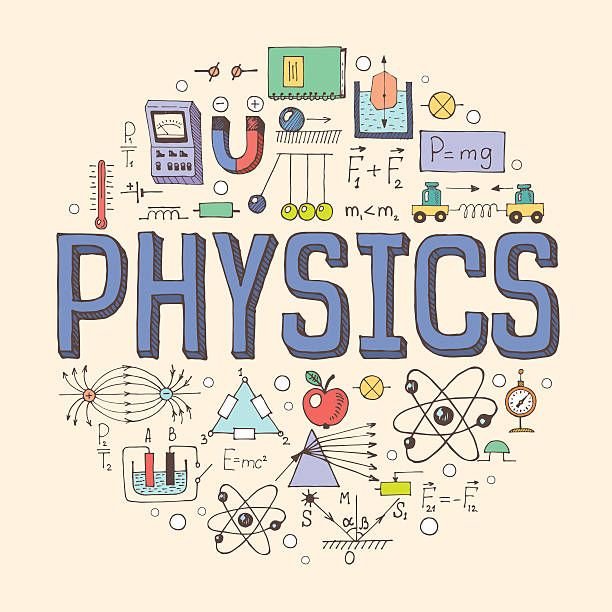
What you’ll study: BSc programmes are built around scientific disciplines. Depending on your major, you’ll take courses in mathematics, physics, chemistry, biology, computer science, statistics, geology, or related fields. The work is technical, analytical, and evidence-based. Expect labs, practicals, problem sets, and a heavy emphasis on mathematical reasoning.
Requirements: almost every BSc programme requires Mathematics (not Mathematical Literacy) with a strong mark — typically Level 5 (60%) or higher. Many also require Physical Sciences. Some programmes, like Biological Sciences, may accept Life Sciences instead. Check the specific requirements for your chosen university and programme, because they vary.
Career paths: BSc graduates move into engineering, medicine (with further study), IT and software development, research, environmental management, actuarial science, data analytics, pharmaceutical sciences, and academic research. Many BSc careers require postgraduate study — a three-year BSc is often just the beginning.
BCom — Bachelor of Commerce
A BCom is the degree for learners interested in business, finance, economics, and the commercial world. If you want to work in accounting, banking, investment, marketing, management, or entrepreneurship, this is likely your starting point.
What you’ll study: core BCom modules typically include accounting, economics, business management, and statistics. From there, you’ll specialise — Accounting, Finance, Marketing, Human Resources, Supply Chain Management, Information Systems, or Economics, depending on your university and interests. The work combines quantitative analysis with business theory and case studies.
Requirements: most BCom programmes require Mathematics (not Maths Lit), particularly BCom Accounting and BCom Finance, which are the most competitive streams. Some universities offer BCom programmes that accept Mathematical Literacy — typically in fields like Human Resources, Marketing, or Tourism Management — but these are the exception, not the rule. Check carefully before assuming Maths Lit will be accepted.
Career paths: BCom graduates enter accounting (CA(SA) with further articles and board exams), financial analysis, banking, investment management, auditing, tax consulting, marketing management, human resources, operations management, and entrepreneurship. BCom Accounting specifically is the starting point for becoming a Chartered Accountant — one of the most respected and well-compensated professional qualifications in South Africa.
BA — Bachelor of Arts
A BA is the broadest of the three degrees, covering the humanities, social sciences, languages, and creative disciplines. It’s also the most misunderstood — too many people dismiss it as a “soft” degree without understanding the career doors it opens.
What you’ll study: BA programmes offer an enormous range of majors — psychology, sociology, political science, history, philosophy, languages (English, Afrikaans, isiZulu, French, and others), media studies, anthropology, criminology, social work, and more. The work is reading-intensive, writing-intensive, and focused on critical thinking, argumentation, and understanding human behaviour and society.
Requirements: BA programmes generally have the most flexible entry requirements of the three degrees. Most don’t require Mathematics — Mathematical Literacy is usually accepted. However, specific BA programmes may have additional requirements. BA Psychology, for instance, may require certain minimum marks in specific subjects. BA Law or pre-law programmes often have higher APS requirements.
Career paths: BA graduates enter law (with an LLB), journalism and media, teaching (with a PGCE), psychology (with Honours and a Master’s), social work, public policy, diplomacy, non-profit management, communications, publishing, and human resources. The BA is also the standard pre-law degree — most students who want to become lawyers start with a BA before completing their LLB.
The Maths Question
This is the single biggest factor that limits or expands your university options, and it’s decided in Grade 9 when most learners don’t fully understand the consequences.
If you take Mathematics, you can apply for BSc, BCom, and BA programmes — all three pathways remain open.
If you take Mathematical Literacy, BSc programmes are closed to you entirely. Most BCom programmes are also closed. You’re largely limited to BA programmes and a handful of BCom specialisations that accept Maths Lit.
This doesn’t mean Maths Lit learners have no future — that’s nonsense. A BA leading to law, psychology, journalism, or teaching is a powerful career trajectory. But if you’re in Grade 9 and still deciding, choose Mathematics unless you have a very clear reason not to. Keeping your options open is worth the harder workload. Resources from LeagueIQ can help you manage the additional challenge with curriculum-aligned Maths study materials.
Double Majors and Specialisations
Within each degree type, you’ll typically choose two or three major subjects that become your specialisation. Some popular and strategically smart combinations include:
- BSc: Computer Science + Mathematics (strong IT career path), Actuarial Science + Mathematical Statistics (actuarial career), Biochemistry + Genetics (medical research)
- BCom: Accounting + Finance (corporate finance and CA route), Economics + Statistics (economic analysis), Marketing + Psychology (consumer behaviour)
- BA: Psychology + Sociology (social research, counselling pathway), Political Science + Philosophy (law, policy), English + Media Studies (journalism, communications)
Choose majors that complement each other and align with your career direction. If you’re unsure, research what employers in your target field actually look for — job listings often mention specific combinations.
University Strengths to Consider
Not all South African universities are equally strong in every field. While all accredited universities offer quality education, certain institutions have particular reputations:
- UCT (University of Cape Town): consistently ranked highest in Africa. Strong across science, commerce, health sciences, and law.
- Wits (University of the Witwatersrand): excellent in engineering, medicine, science, and law. Johannesburg location offers strong industry connections.
- University of Pretoria: highly regarded for accounting, engineering, and veterinary science. Strong overall academic reputation.
- Stellenbosch University: strong across multiple disciplines, particularly engineering, agricultural sciences, and business. Primarily Afrikaans-medium with increasing English options.
- University of KwaZulu-Natal: strong in medicine, education, and agricultural sciences.
That said, don’t choose a university purely based on rankings. Consider location, language of instruction, campus culture, residence availability, proximity to family, and financial feasibility. A degree from any accredited South African university is valuable — your performance matters more than the institution’s name.
Can You Switch Degrees?
Yes — but it gets harder the longer you wait. Transferring between degree types in your first year is usually possible if you meet the entry requirements for the new programme. Switching from BA to BCom requires Mathematics, switching from BCom to BSc requires the relevant science subjects, and so on.
By second year, transfers become more complicated because you’ve already completed modules that may not count toward the new degree. By third year, switching effectively means starting over. This is why getting the initial choice right — or at least close to right — matters so much.
Understanding APS Requirements
The Admission Point Score (APS) is a numerical score calculated from your matric results. Each university has its own APS calculation method, but the general principle is the same: your marks in each subject are converted to points, and the total determines which programmes you qualify for.
Competitive programmes have high APS cutoffs. BCom Accounting at top universities might require an APS of 36 or higher. BSc Engineering might require 38+. BA programmes generally have lower APS requirements, but popular programmes like BA Law or BA Psychology at top universities are still competitive.
Beyond the APS total, pay attention to specific subject requirements. A high APS won’t help if you don’t have the specific subjects a programme demands. Always check both the APS and the subject requirements for every programme you apply to.
Making the Decision
Here’s the advice that no university prospectus gives you: don’t choose based on what sounds impressive at family gatherings. Choose based on three things:
- What are you genuinely good at? Your strengths in school are the strongest predictor of university success. If you struggle with Maths, forcing yourself into a BSc or BCom Accounting programme will likely end in academic exclusion.
- What do you enjoy studying? University requires sustained focus over three or four years. If you hate every minute of your coursework, you won’t perform well — regardless of what the degree is “worth” in the job market.
- What career are you aiming for? Work backwards from the career you want. If you want to be a lawyer, you need a BA + LLB. If you want to be an engineer, you need a BSc. If you want to be a CA, you need a BCom Accounting. Let the career goal determine the degree, not the other way around.
If you’re still unsure — and many Grade 12 learners are — choose the degree that keeps the most doors open. A BCom with Mathematics allows a switch to BSc. A BA allows entry into law, psychology, education, and many other fields. There’s no single “best” degree — there’s only the best degree for you.
For study materials to help you achieve the matric marks you need for your chosen programme, LeagueIQ offers curriculum-aligned resources created by South African educators across all major subjects. Strong matric results are the foundation of university access — invest in your preparation accordingly.
Was this article helpful?